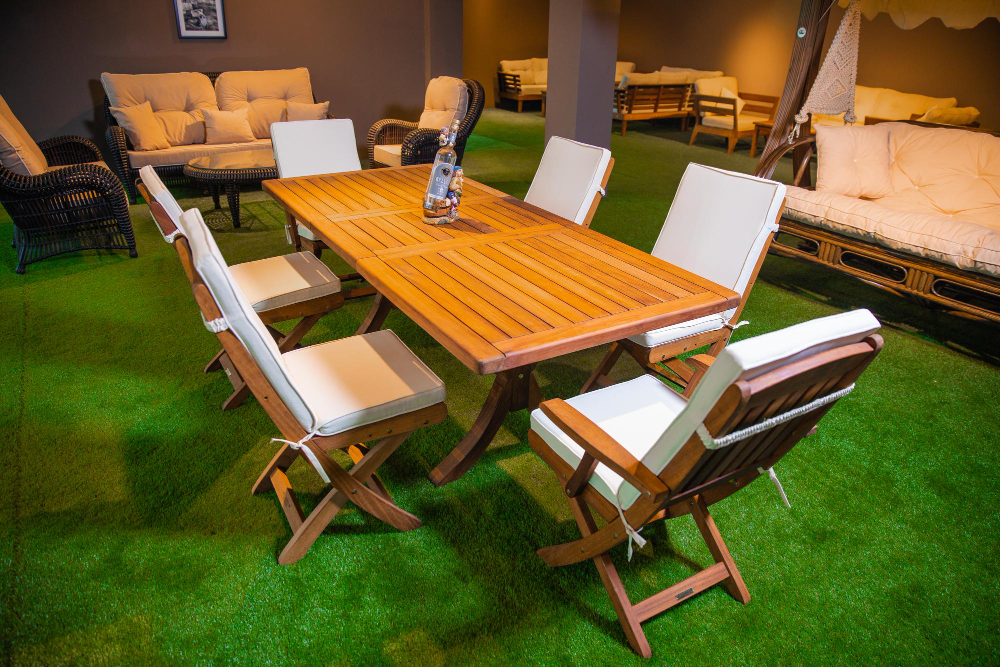
Living in Central Florida means your backyard is basically a second living room. From Apopka to Lake Nona, homeowners want to enjoy their outdoor spaces without constantly mowing and watering. A common question we get after installing a new lawn is simple: Can you put furniture on artificial grass?
The short answer is yes, you can place patio furniture on artificial grass. Most high-quality turf is durable enough to support tables, chairs, and even sofas. However, heavy items can flatten the blades over time, and sharp edges can tear the backing if you're not careful. You just need to follow a few precautions to keep your investment looking perfect.
Is It Safe to Put Heavy Furniture on Synthetic Turf?
Yes, high-quality synthetic turf can handle the weight of most outdoor furniture, including heavy iron tables and sectionals. Modern artificial turf in Apopka and Orlando is designed with resilience in mind, often featuring a face weight of 40 to 80 ounces per square yard. This density allows the fibers to bounce back after being compressed.
However, leaving a heavy object in the same spot for years will eventually cause "compaction." This is where the fibers lie flat, and the infill gets pushed aside. While this doesn't usually destroy the grass, it does leave a noticeable dent that takes some work to fix.
What Type of Furniture Works Best on Turf?
Furniture with wide, flat bases or rounded legs is best for artificial grass because it distributes weight evenly. Avoid chairs with sharp, narrow metal legs, as these can cut through the turf backing, essentially slicing your lawn like a knife.
If you're setting up a recreational area, perhaps near a bocce ball court installation, stick to aluminum, resin, or wicker furniture. These materials are lightweight and weather-resistant. If you have wrought iron or heavy wood furniture, it's still usable, but you'll want to check the feet. If the legs are narrower than a half-dollar coin, you should use protective pads.
How Do I Protect My Artificial Grass from Damage?
To stop furniture from sinking into or cutting your turf, use furniture coasters or pads under the legs. You can find simple rubber or plastic coasters at a local hardware store for about $10 to $20 a set. These widen the footprint of the furniture leg, reducing the pressure on any single point of the grass.
Another trick our team recommends is rotating your furniture. Every 3 to 4 months, shift your table or chairs just a few inches. This small change prevents the fibers from being crushed in the same direction permanently. It allows the "rested" grass to stand back up (with a little help from a stiff brush) while a new section takes the weight.
Will Furniture Flatten Artificial Grass Permanently?
Furniture generally won't flatten artificial grass permanently if you maintain it correctly. When you move a heavy chair that’s been sitting for a month, the grass underneath will look matted. This is normal.
To fix this, use a broom with synthetic bristles (never metal) or a specialized turf rake. Brush the fibers against the grain—in the opposite direction they are leaning. This "blooms" the blades back up. During a professional artificial grass installation, we add a specific amount of infill (sand or rubber) between the blades. This infill acts like a shock absorber. If you notice your furniture is sinking too deep, your turf might be low on infill and need a top-up.
Can Window Reflections Melt My Turf?
One specific danger for artificial turf in Apopka and surrounding areas is "solar reflection." This happens when sunlight bounces off highly reflective, energy-efficient windows and hits the turf. This concentrated beam can heat the surface to over 175°F, which is hot enough to melt plastic fibers.
If you have furniture made of glass or shiny metal, it can create a similar magnifying glass effect. We recently helped a customer in Dr. Phillips who had a small melted patch caused by a curved, shiny metal planter. To avoid this, keep shiny objects out of direct sunlight on the turf, or use window screens to diffuse the reflection from your house.
Best Practices for Arranging Your Backyard
When planning your layout, try to create clear pathways that avoid walking over the same spot of grass every single time. High foot traffic combined with the weight of furniture can wear down the fibers faster.
In our 15+ years serving Central Florida, we've learned that placing heavy furniture on the perimeter of the lawn—perhaps on a paver border or concrete pad—often looks best and saves the grass for the kids and pets. If you do place furniture directly on the green, check the feet for rust. Florida's high humidity (often 70-80% in summer) can cause metal furniture to rust quickly. That rust will drip down and stain your beautiful green turf, which is a pain to clean.
Real-World Examples in Central Florida
We see successful setups all the time. For example, a homeowner in Winter Park set up a lightweight sectional sofa directly on their turf. They used a large outdoor rug under the coffee table to catch spills and reduce friction. Three years later, the grass underneath is still in great shape because they brush it out seasonally.
Another client with artificial turf in Apopka uses heavy wooden Adirondack chairs. Because the chairs have wide, flat runners instead of legs, they sit on top of the grass without digging in. They simply hose down the area to remove pollen and dust, and the yard looks brand new.
The Bottom Line on Turf Furniture
You absolutely can enjoy your patio furniture on your artificial lawn. By choosing items with wide bases, using coasters for sharp legs, and brushing the grass occasionally, you can keep your backyard looking like a resort.
If you're ready to upgrade your yard or need advice on your current setup, we're here to help. We are the local experts you trust with your business and customers.
Need help with your landscape?
Contact From The Ground Up Landscaping at (407) 501-2107 today.