· 6 min read
Artificial turf looks natural when you choose the right blade profile, prepare a proper sub-base, use quality infill, and integrate native landscaping around the edges. Get any one of these steps wrong, and the result looks flat, plastic, and obviously fake. Get them all right, and most neighbors won't be able to tell the difference.
Longwood homeowners are making the switch from struggling St. Augustine and Bermuda grass to artificial turf at a growing rate, and it's easy to understand why. Florida's sandy soil, unpredictable rain, and scorching summers make maintaining a natural lawn genuinely difficult. But aesthetics still matter. Nobody wants a yard that looks like a putting green in the middle of a residential neighborhood.
From the Ground Up Landscaping has spent over a decade installing artificial turf across Central Florida. Call us at (407) 501-2107 for a free estimate and to discuss what a natural-looking installation would take for your specific yard.
The good news? A realistic result isn't luck. It's technique.
Does Sub-Base Preparation Actually Affect How Natural Turf Looks?
Yes. A poorly prepared sub-base causes turf to sit unevenly, creating bumps and depressions that make it obvious the lawn isn't real. In Longwood and the surrounding Seminole County area, the sandy soil drains quickly but can shift, especially after heavy afternoon thunderstorms. A properly compacted 3/8" minus aggregate base, typically 3 to 4 inches deep, creates a stable foundation that mirrors the look and feel of natural soil.
Beyond aesthetics, drainage matters too. Turf sitting over a weak base holds water, which leads to odors and premature breakdown of the fibers. A solid sub-base lets water drain within seconds rather than pooling on the surface. This is one area where cutting costs early almost always leads to a reinstallation within 3 to 5 years.
How Do You Choose Turf Fibers That Look Like Real Grass?
Pick a product with multi-toned fibers and non-uniform pile heights. Single-color, uniform turf is the fastest way to make a yard look artificial. Real St. Augustine and Bermuda grass, both common throughout Longwood neighborhoods like Wingfield Reserve and near Longwood's historic district, have natural variation. Some blades are darker, some lighter. Some stand upright, others lay flat.
Look for turf that includes at least two or three color tones, a mix of straight and curled blade shapes, and a pile height between 1.5 and 2 inches for residential lawns. Products with a "thatch layer," a brown, wiry base that mimics the organic layer beneath real grass, add significant depth and realism. They also help the lawn look full rather than sparse, especially when viewed from the street.
What Role Does Infill Play in a Natural-Looking Lawn?
Infill keeps blades standing upright and gives the turf weight, making it move and compress the way real grass does underfoot. Without it, fibers flatten quickly, and the lawn takes on that telltale shiny, mat-like appearance.
For residential installations in Longwood, a silica sand and coated sand blend works well. It holds moisture slightly, which helps keep the surface temperature down during Florida's 90-plus-degree summers. Some homeowners in shaded yards near Lake Jesup Conservation Area opt for organic infill like cork, which stays cooler and feels more natural underfoot. Budget roughly $0.50 to $1.50 per square foot for quality infill, depending on the product type. This isn't a step to skip to save money.
How Do You Hide Seams and Keep the Grain Direction Consistent?
Visible seams are the single most common sign of a low-quality artificial turf installation. Seams need to be cut cleanly, glued with a strong polyurethane adhesive, and positioned so they run parallel to the main sightline from your home's entrance or street view.
Grain direction matters just as much. Every artificial turf product has a direction the fibers naturally lean, similar to the grain in wood. When sections are laid in opposing directions, the color appears inconsistent, with one section looking lighter or darker depending on where you stand. A skilled installer always maps out grain direction before cutting. All sections face the same way. On a well-installed yard, you won't find the seam even if you look for it.
How Do Native Plants and Landscaping Make Turf Look More Real?
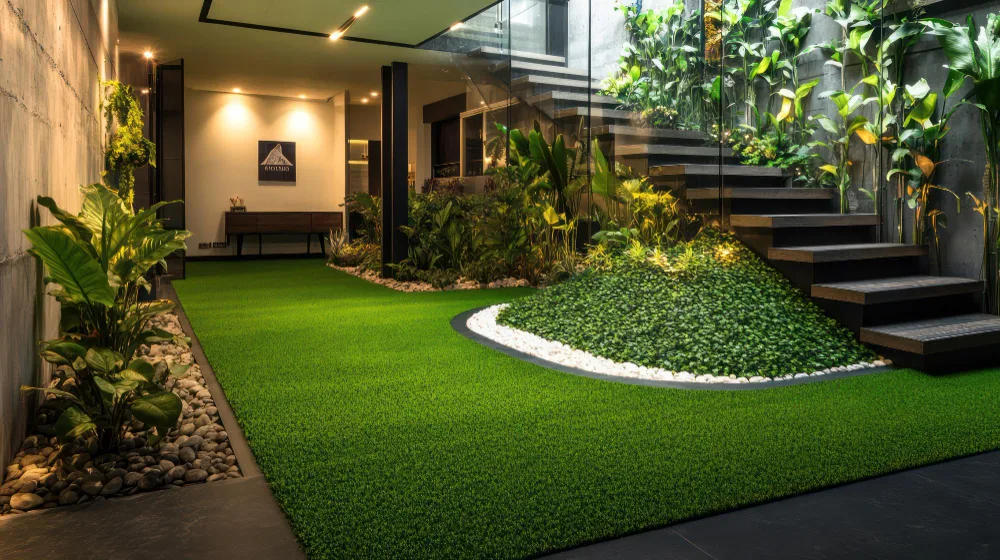
Surrounding turf with native Florida plants, mulch beds, and curved edges is one of the most effective tricks for creating a natural appearance. Hard, geometric lines where turf meets a fence or concrete slab look industrial. Gentle, curved borders with liriope, ornamental grasses, or native wildflowers break up the uniformity and draw the eye away from the transition zones.
Using 2 to 3 inches of mulch in adjacent garden beds adds color and texture contrast. Incorporating native shrubs like Simpson's stopper or Walter's viburnum, both well-suited to Longwood's climate, frames the turf naturally. If you have dogs and want a dedicated pet turf installation in Longwood, Florida, a simple low border hedge or decorative edging between the pet area and main lawn keeps the space looking intentional and clean. The landscaping around the turf does as much work as the turf itself.
What's the Right Maintenance Schedule to Keep Turf Looking Fresh?
Brush the turf fibers upright every 4 to 6 weeks using a stiff-bristle broom or a power broom. Fibers flatten under foot traffic over time, especially in high-use zones like the path from the back door to the yard. Regular brushing restores the upright position and keeps the lawn looking full and green rather than worn.
Rinse the surface monthly, or after any major event or pet activity. Longwood's summer storms usually handle the rinsing naturally, but during the drier months between November and April, a hose-down prevents dust and pollen buildup. For homeowners with dogs, our pet turf in Longwood, Florida installations include antimicrobial infill that significantly reduces odors, but a quick rinse every 1 to 2 weeks keeps the surface fresh.
Check the infill level twice per year. High-traffic areas lose infill faster than others. Topping off with the appropriate infill material, which typically costs $0.75 to $1.25 per square foot for a spot application, restores the turf's cushion and helps fibers maintain their upright position. This small task extends the life of the lawn by years.
Need Help Getting Your Longwood Lawn to Look Its Best?
A natural-looking artificial lawn comes down to material selection, skilled installation, and consistent grooming. Each step builds on the last. The right fibers on a weak base still look fake. Perfect seaming on low-quality turf won't hold up. Done properly, a well-installed synthetic lawn in Longwood lasts 15 to 20 years with minimal upkeep and looks great year-round.
We also install indoor and outdoor volleyball courts and a full range of residential landscaping services across Seminole and Orange counties, if you're thinking about upgrading more than just the lawn.
From the Ground Up Landscaping serves homeowners throughout Longwood, Oviedo, Lake Mary, and the greater Central Florida area. Call us at (407) 501-2107 for a free consultation and on-site estimate. We'll walk your yard with you, explain exactly what your project needs, and give you a clear price with no surprises.