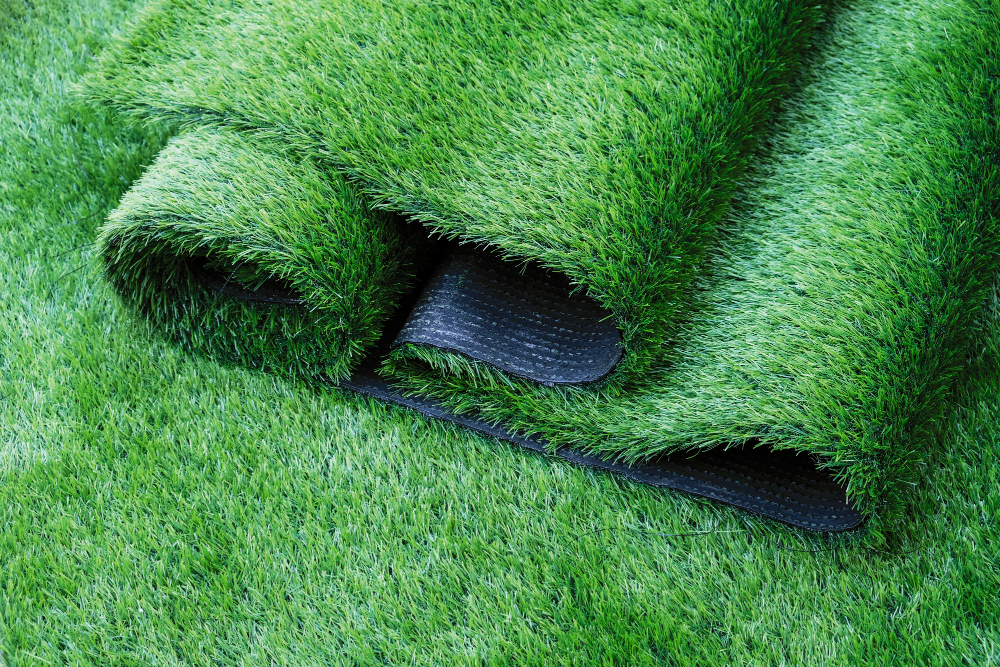
If you have a budding baseball star at home in Central Florida, you know the struggle of maintaining a practice area. Natural grass in a high-traffic batting cage turns into a mud pit during our rainy August afternoons and a dust bowl by January. That’s why so many homeowners are looking at artificial turf in Sanford, Lake Mary, and Oviedo as a permanent solution.
But the big question we get asked constantly is: "Is this something I can install myself, or is it a major construction project?" The honest answer is that while it looks simple on YouTube, getting a safe, level, and durable surface for sports requires precision.
Whether you're looking to install a batting cage, a dedicated sports court, or even custom putting greens, understanding the process helps you decide if it’s a DIY weekend or a job for the pros.
Why Switch to Artificial Grass in Batting Cages?
Why are so many Orlando homeowners ditching natural grass for synthetic turf in their sports areas?
In Florida, the combination of intense UV rays and daily thunderstorms makes maintaining natural grass in high-traffic sports zones nearly impossible. Natural sod in a batting cage typically dies within 3-4 months of heavy use. Artificial turf solves this instantly. It provides a consistent surface that doesn't rut, creating a safe footing for athletes pivoting in the batter's box. Plus, it drains water at 30+ inches per hour, meaning your kids can practice 15 minutes after a summer downpour ends.
Beyond the practicality, there is the longevity factor. A high-quality sports turf installation typically lasts 10 to 15 years with minimal maintenance. You won't spend your Saturday mornings mowing or reseeding the batter's box. You just brush it occasionally to keep the fibers standing up.
How Much Does Artificial Turf Cost vs. Natural Grass?
Is the upfront cost of artificial turf worth it compared to replacing sod repeatedly?
Yes, because while natural sod is cheap initially (about $1.00-$1.50 per square foot installed), the maintenance costs add up fast. For a standard 12x50 batting cage (600 sq ft), you might spend $2,000 a year on water, fertilizer, pest control, and resodding worn-out spots.
High-quality sports turf installation generally costs between $8 and $14 per square foot, depending on the site prep needed. So, for that same 600 sq ft cage, you might look at an investment of $4,800 to $8,400. However, that cost is one-and-done for over a decade.
We see this calculation play out for other backyard additions, too. Whether it's indoor and outdoor shuffleboard court installation or a new batting cage, the return on investment usually hits around year three or four. After that, the surface effectively pays for itself in saved water and maintenance bills.
Can I Install Artificial Turf in Sanford Myself?
Does installing sports turf require professional equipment, or can a homeowner handle it with rental tools?
Technically, a homeowner can install turf, but sports applications like batting cages require a much higher degree of accuracy than a decorative lawn. If the base isn't compacted perfectly, you get dips and ridges. In a batting cage, a bad bounce caused by an uneven surface can lead to a baseball hitting a player in the face.
Installing artificial turf in Sanford involves excavating 3-4 inches of soil, hauling in tons of crushed aggregate, compacting it with a heavy vibratory plate compactor, and then seaming the turf so securely that cleats won't rip it up.
Here is where DIY projects often fail:
- The Base: If you don't use the right aggregate (usually 3/8" minus), the drainage fails.
- The Seams: If seams aren't glued and nailed correctly, they become trip hazards.
- The Infill: You need the appropriate amount of silica sand or rubber infill to protect the backing and provide the right "cushion" for athletes' joints.
Real-World Examples in Central Florida
We have worked on properties from the historic brick streets of Sanford to the new developments in Lake Nona, and the demand for backyard sports facilities is skyrocketing.
One recent project in Seminole County involved a family with two high-school softball players. They tried maintaining Bahia grass in their cage, but it was just dirt and weeds. We installed a padded sports turf system. Now, the girls practice year-round without tracking mud into the house.
Another client in Winter Park converted an unused side yard into a multi-purpose training zone. They chose a shorter pile height turf that works for both batting practice and agility drills. Because we installed a proper drainage base, the area stays dry even during those torrential July storms.
Installation Tips for Optimal Performance
If you're planning a sports turf project, what are the non-negotiables for success?
1. Don't Skimp on the Sub-Base
This is the most critical layer. In our sandy Florida soil, we recommend a minimum of 3 inches of compacted crushed concrete or limestone. This creates a rock-solid foundation that won't shift under heavy foot traffic.
2. Choose the Right Turf Weight
For a batting cage, look for a face weight of at least 40-60 ounces. You want durability. A lightweight "pet turf" won't stand up to the twisting and turning of cleats in a batter's box.
3. Secure the Edges
In a sports application, the edges take a beating. We use 6-inch non-galvanized spikes every few inches along the perimeter. For artificial turf in Sanford projects where the ground can be sandy, we sometimes reinforce edges with a concrete curb or pressure-treated timber to lock everything in place.
4. Brush it Regularly
Maintenance is easy, but it's not zero. High-traffic areas (like the batter's box) will mat down over time. Use a stiff-bristle push broom to fluff the fibers back up once a week. This keeps the surface consistent and extends the life of the turf.
Is It Time to Upgrade Your Backyard?
Installing artificial turf for a batting cage or sports court is a significant project, but it changes how you use your yard. Instead of worrying about mud, bugs, and bald spots, you get a professional-level facility right outside your back door.
The durability and consistency of modern synthetic grass make it the smartest choice for Florida homeowners who are serious about sports. It withstands our heat, handles our rain, and keeps your athletes safe.
If you're ready to stop maintaining dirt and start practicing on a pro-level surface, we can help. Our team knows exactly how to build these systems to last in our local climate.
Call From the Ground Up Landscaping today at (407) 501-2107 or visit us online to contact From the Ground Up Landscaping, Inc. for a free consultation.