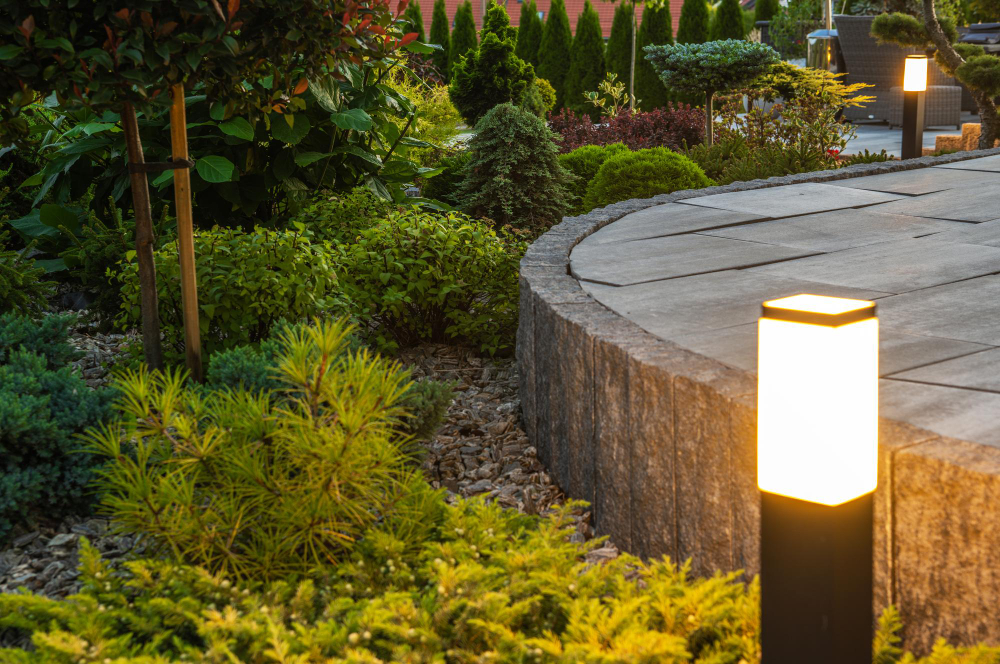
Have you ever driven through Lake Nona or Dr. Phillips at night and noticed how some homes just seem to glow? That welcoming warmth isn't an accident; it's the result of well-planned low-voltage landscape lighting.
In Central Florida, where our outdoor living season lasts nearly all year, lighting isn't just about security—it's about extending the time you can enjoy your patio or pool deck. Low-voltage systems (typically 12 volts) are safer, easier to install, and significantly more energy-efficient than the old high-voltage systems.
Why Choose Low-Voltage Lighting for Your Florida Home?
Why do homeowners in neighborhoods like Winter Park and Oviedo prioritize low-voltage systems? The answer usually comes down to three things: safety, savings, and curb appeal.
Low-voltage lighting uses a transformer to step down the standard 120-volt household current to a safer 12 volts. This eliminates the risk of serious electrical shock, making it safe for kids and pets playing in the yard. Plus, the installation is less invasive because the cables don't need to be buried as deeply as standard electrical lines.
Energy Efficiency and Cost Savings
Can low-voltage lighting really lower your electric bill? Yes, especially when paired with LED bulbs, which consume about 80% less energy than halogen bulbs.
In a typical Orlando home with 10 landscape lights running for 6 hours a night, switching to LED low-voltage fixtures can drop your operating costs from around $25 per month to less than $5 per month. Over a year, that's a saving of roughly $240. Because these systems run on lower power, they put less strain on your home's electrical grid, which is helpful during our peak AC usage months.
Improved Safety and Security
A well-lit home is a safer home. Illuminating dark corners, walkways, and entry points discourages intruders and prevents trips and falls.
We often see homes with beautiful pavers or intricate landscaping that become invisible—and hazardous—after sunset. By placing path lights along walkways or installing downlights in trees, you remove tripping hazards for guests. For security, floodlights can wash large areas with light without the harsh glare of a standard security spotlight, keeping your property visible but still inviting.
Aesthetics and Property Value
Does lighting actually increase property value? Real estate experts suggest that professional landscape lighting can increase perceived home value by up to 20%.
It highlights your home's best features. If you have invested in professional retaining wall builders to create tiered garden beds, lighting those walls at night adds depth and drama. It turns a flat, dark yard into a multi-dimensional landscape. Even features like artificial turf, Dr. Phillips homeowners lov,e can look lush and inviting at night with the right uplighting.
Ease of Installation
Installing a low-voltage system is significantly faster and less disruptive to your lawn than high-voltage systems. Because the current is low, the cables only need to be buried a few inches underground, meaning we don't have to trench deep through your established sod or flower beds.
For many Florida homeowners, this is the deciding factor. You can have a complete system installed in 1-2 days without your yard looking like a construction zone.
Types of Low-Voltage Landscape Lighting
What fixtures should you choose for your yard? It depends entirely on what you want to highlight.
Path Lighting
Path lights are the most common fixtures we install. They stand 12-24 inches high and direct light downward to illuminate walkways and driveways. We typically space these 6-10 feet apart to avoid the "runway effect" while still ensuring safe footing.
Spot Lighting (Uplighting)
Spotlights are used to highlight specific features, like a majestic Palm tree or an architectural column. By placing these at the base of the object and angling them upward, you create a focal point. This technique works exceptionally well on textured surfaces, like the stone veneer on a house or a rugged tree trunk.
Flood Lighting
Floodlights cast a wider beam (typically 40 degrees or more) to illuminate larger areas like driveways, patios, or large hedges. They are excellent for security purposes or for highlighting wide structures like fences or walls.
Deck and Hardscape Lighting
If you have an outdoor kitchen or a pool deck, hardscape lighting is essential. These small fixtures can be mounted under the lip of a retaining wall cap or recessed into stair risers. They provide subtle, safety-focused light that doesn't blind you while you're trying to relax outside.
Installation Tips for Florida Homes
Installing lighting in Florida comes with a unique set of challenges due to our climate and soil.
Check Local Zoning and HOA Rules
Before digging, check with your HOA. Many communities in Central Florida have specific rules regarding light pollution and fixture styles. You want to ensure your new lights enhance the neighborhood rather than causing a glare dispute with neighbors.
Weather Considerations
Florida weather is tough on outdoor equipment. The combination of intense UV rays, high humidity, and heavy summer rains means you need durable fixtures. We recommend solid brass or copper fixtures over plastic or aluminum. Brass and copper won't corrode in the humidity and actually develop a nice patina over time.
Also, consider your lawn maintenance. If you have an artificial grass installation scheduled or already in place, wiring needs to be run strategically before the turf goes down or carefully along the perimeter to avoid damaging the base.
When to Hire a Professional
While you can buy kits at big-box stores, professional installation ensures longevity. We use waterproof wire connectors (essential in our wet soil) and proper voltage drop calculations to ensure the light at the end of the run is just as bright as the light closest to the transformer.
Maintenance: Keeping Your Lights Bright
How do you maintain landscape lights in Florida? It's mostly about keeping them clean and checking connections.
Bulb Replacement and Upgrades
If you haven't switched to LED yet, now is the time. If an old halogen bulb burns out, replace it with an LED equivalent. They last 30,000-50,000 hours compared to the 2,000 hours of halogen.
Cleaning Fixtures
Dirt, mulch, and hard water deposits from irrigation systems can dim your lights. Wipe down the lenses with a damp cloth every few months. If you have artificial turf, Dr. Phillips residents often have, make sure the turf fibers aren't blocking ground-level fixtures.
Troubleshooting Common Issues
If a section of lights goes out, it's usually a loose connection or a cut wire (often from an edger). Check the connection at the first light that isn't working. If the whole system is out, check the GFCI outlet your transformer is plugged into—Florida thunderstorms often trip these outlets.
Lighting Up Your Central Florida Home
Low-voltage landscape lighting is one of the best investments you can make for your home's safety and beauty. It creates a warm welcome every evening and costs pennies a day to operate.
Whether you're looking to highlight a new artificial turf Dr. Phillips installation or illuminate a stone pathway, the right lighting makes all the difference.
Need Help With Your Landscape Lighting?
Don't let your beautiful landscaping disappear when the sun goes down. Our team has years of experience designing and installing custom lighting packages for homes across Central Florida.
Contact From the Ground Up Landscaping at (407) 501-2107 today to schedule your free estimate. Let's make your home shine tonight.