· 5 min read
A real backyard putting green starts with a design that fits your yard and your game, then moves to excavation, a compacted stone base shaped with breaks, cups set into that base, and putting green turf installed and dialed in for speed. Done right, it rolls true for years and needs almost no upkeep, even through a Florida summer.
If you have been picturing a few practice putts after dinner instead of a drive to the course, that idea is more achievable than most people think. At From the Ground Up Landscaping, we build greens for homeowners who actually play, and we would love to help you turn the daydream into a plan. Schedule a design consultation by calling (407) 501-2107.
How big should a backyard putting green be, and how many cups and breaks does it need?
Most backyard greens land somewhere between a few hundred and roughly a thousand square feet, with two to four cups and a few gentle breaks. The right size depends on your yard, your budget, and how you like to practice.
Think about the putts you want to work on. A small green with one cup is great for lag practice and short putts. Add a second or third cup and you can play different lines from the same spot, which makes practice feel more like a real round. Breaks are what make it fun. A slight rise across the middle or a gentle slope toward one edge forces you to read the green instead of just pushing the ball straight.
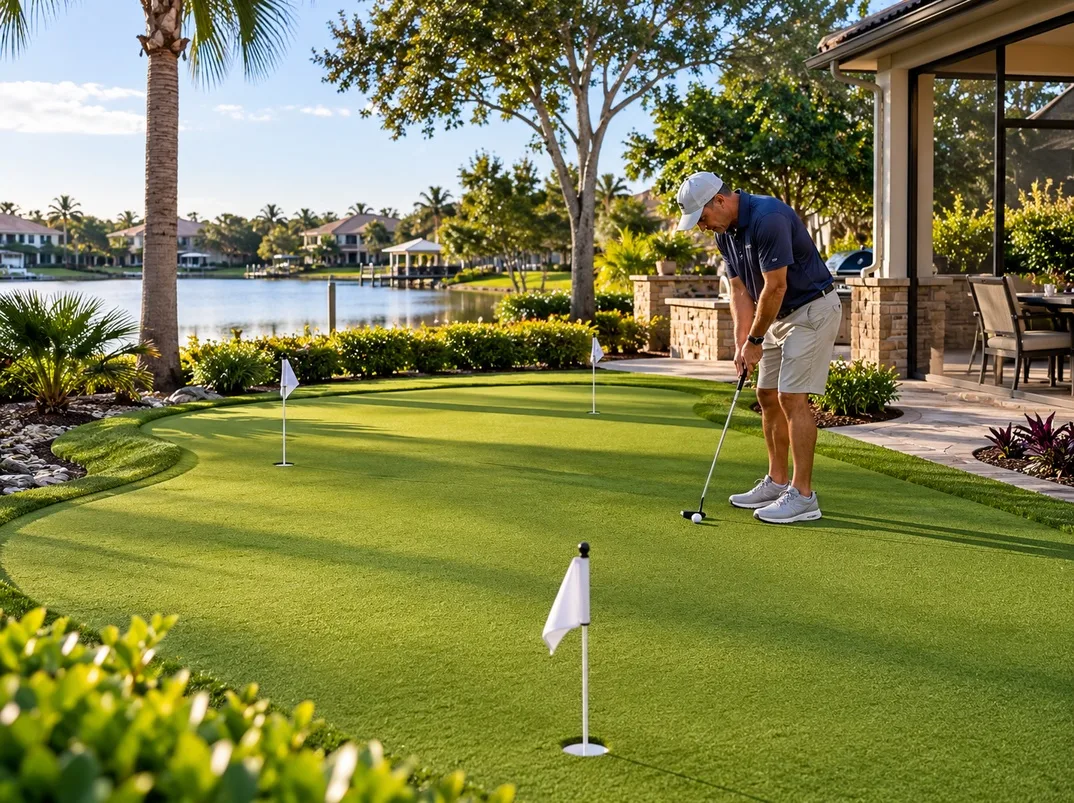
Golf runs deep in this part of Orange County, and plenty of homeowners near Isleworth and Keene's Pointe already know exactly what kind of putt gives them trouble. Tell us. We can shape the green to rehearse those reads. Cups are standard 4.25 inch regulation size, set flush with the surface, and flags make chipping practice possible from the lawn. Our custom putting greens are designed around your yard's shape, sun exposure, and the view from the house.
Why does a compacted base matter for a true roll?
The base is what makes a putting green roll true. Without a properly compacted stone base, the surface develops low spots, soft areas, and lumps that send putts off line within months.
Installation starts with removing grass and several inches of soil. A weed barrier goes down, followed by crushed aggregate that is spread, wetted, and compacted in layers with a plate compactor. This is where the breaks are built. We shape the slopes in the base itself, checking them with a level and test putts long before any turf arrives, because the turf will follow whatever shape lies beneath it.
Windermere's sandy soil makes this step even more important. Homes along the Butler Chain of Lakes often sit on loose, sandy ground with a high water table during the rainy season. A well compacted aggregate base drains quickly and resists shifting, so heavy summer storms do not leave puddles or soft spots on the green. Skimp here, and no amount of expensive turf will fix the roll.
How low-maintenance is putting green turf in the Florida heat?
Very low. Synthetic putting green turf needs no mowing, watering, or fertilizer, and it plays the same in July as it does in January. Occasional brushing and clearing debris keep it in top shape.
Natural bent grass greens need constant care and do not thrive in Central Florida. Synthetic putting turf is made with short, dense fibers and is usually topped with a layer of sand infill, which helps control the ball speed and keeps the fibers standing up. Most homeowners only need to blow off leaves, brush the surface now and then, and add a little infill over time.
Heat is the main thing to plan for. Synthetic turf can get hot in direct afternoon sun, so many families putt in the morning or evening anyway. Positioning the green near shade trees, or near a lanai on the cooler side of the house, helps. Around Lake Down and other lakefront lots, oak debris and pollen are the biggest chores, and a leaf blower handles both in minutes.
How can a putting green blend with your turf and landscaping?
A putting green looks best when it is framed by a fringe of longer turf and woven into the surrounding beds, paths, and patio. That way it looks like part of the landscape instead of a mat dropped into the yard.
We often surround the green with a slightly taller collar of synthetic fringe, which makes chip shots feel realistic and gives the edges a finished look. From there, the green can transition into natural sod, synthetic lawn, or planted beds. If you are considering artificial grass installation for the rest of the yard, combining both projects keeps the look consistent and the installation efficient.
One Windermere homeowner wanted a green that was challenging enough for him and still friendly for his seven year old son, who celebrated any putt that finished within three feet of the cup. Our design blended into the surrounding landscape and included several cups and gentle breaks over a compacted base.
Ready to make your backyard green a reality? Call From the Ground Up Landscaping at (407) 501-2107, or book your putting green consultation, and we will design a green that fits your yard and your game.