· 6 min read
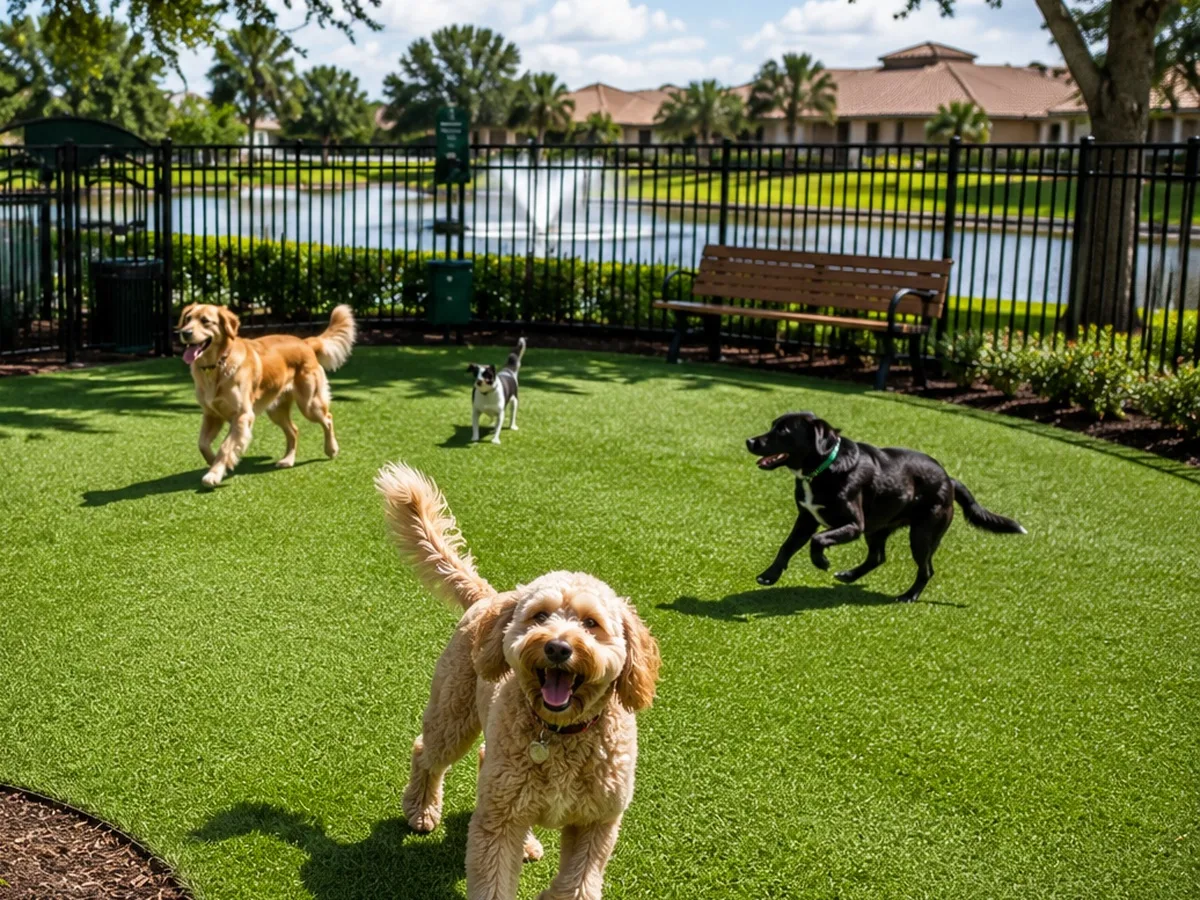
Lake Mary HOA boards comparing dog park turf companies should focus on drainage, odor control, turf durability, warranty terms, and long term maintenance, not just installation price. A community dog park near Downtown Lake Mary will receive far more concentrated pet traffic than a typical residential yard. The right system needs to handle repeated use while remaining practical for the association to maintain. Contact From the Ground Up Landscaping to request a dog park walkthrough and bid or call (407) 501-2107.
Communities around Central Park at City Hall should also compare what is beneath the visible turf. From the Ground Up Landscaping installs pet turf systems using an aggregate base and high flow backing designed to help urine and water drain through the surface instead of remaining trapped in heavily used areas.
For associations near Trailhead Park, odor management deserves equal attention because dozens of dogs using the same relief area can create conditions very different from a private backyard. Boards should ask each vendor what infill and backing systems they recommend for high traffic community use and exactly what routine cleaning will be required after installation.
Start With the Drainage System, Not the Turf Color
Artificial grass can look excellent on installation day and still become a maintenance problem if the base does not drain properly.
For a shared dog park, ask vendors to explain the entire drainage assembly. That means the prepared subgrade, aggregate base, turf backing, seams, slope, and how water and pet urine will move away from the surface.
From the Ground Up Landscaping describes its pet turf installation systems as using a 3/8 inch minus aggregate base with high flow backing for drainage.
Do not accept a vague statement that the turf "drains well." Ask what system is being installed and whether the vendor has accounted for the site's existing slope and drainage conditions.
If a company provides a specific drainage rate, make sure you are comparing the same measurement across every proposal.
Ask Exactly How the System Controls Odor
Odor control is one of the biggest differences between standard landscape turf and a system designed for dogs.
Pet urine can pass through permeable turf, but the board should also understand what happens after it reaches the infill and base. Ask whether the proposal includes odor control infill, antimicrobial backing, or other products intended for pet use.
Zeolite is one type of infill commonly discussed for pet areas because of its odor management properties. If a vendor recommends it, ask how much will be installed, where it will be placed, and what ongoing maintenance it requires.
From the Ground Up Landscaping states that its pet systems can use infills and antimicrobial backing to help minimize odors.
The board should compare the complete odor management system rather than treating all artificial grass as equivalent.
Compare Backing and Fiber Durability
A community dog park is a high traffic installation.
Dogs run, pivot, dig, scratch, and repeatedly use the same paths around gates, benches, drinking areas, and waste stations. Those concentrated traffic patterns put more stress on turf than many residential lawn applications.
Ask each company what turf product it proposes and why that product is appropriate for community dog use. Review the fiber construction, backing, seam method, edge security, and resistance to digging or clawing.
From the Ground Up Landscaping lists durable fibers designed to resist digging, clawing, and heavy use as a feature of its pet turf systems.
Boards should be comparing product specifications, not just sample appearance.
Read the Warranty Before Comparing Prices
A warranty can influence the long term value of a turf project, but only if the board understands what it actually covers.
Do not assume that a longer advertised warranty automatically means better protection. Ask whether the warranty comes from the turf manufacturer, the installer, or both.
The proposal should make clear:
- Warranty length
- What defects are covered
- What installation issues are covered
- Exclusions related to pet damage or improper maintenance
- Whether labor is included in a warranty repair
- What maintenance must be documented to keep coverage valid
The information provided for this article does not establish a specific warranty length for From the Ground Up Landscaping, so the HOA should request the current warranty terms as part of its bid review.
Budget for Maintenance After Installation
Artificial turf eliminates mowing and routine lawn fertilization, but a dog park still requires maintenance.
Waste needs to be removed promptly. The turf should be rinsed and cleaned as appropriate, debris removed, fibers groomed when necessary, and infill monitored. High traffic zones may deserve more attention than the rest of the park.
Ask every bidder to provide a recommended maintenance schedule and identify which tasks the HOA can handle internally versus which services should be performed professionally.
The board should also request estimated recurring maintenance costs. A low installation bid can become less attractive if the system requires significantly more professional servicing over its useful life.
Compare Bids Apples to Apples
The easiest way to make a defensible board decision is to require every vendor to price the same basic scope.
Compare:
- Turf product and backing
- Base preparation
- Drainage design
- Odor control infill
- Antimicrobial components, when offered
- Edging and seam construction
- Warranty terms
- Initial grooming and cleanup
- Recommended maintenance
- Ongoing maintenance costs
- Work specifically excluded from the proposal
When reviewing artificial grass installation, the board should also consider whether the installer has accounted for Florida rainfall, existing drainage, and the intensity of community use.
A detailed bid makes it easier to explain the decision to residents because the board can show why one system provides better overall value instead of simply saying one contractor had a different price.
Walk the Dog Park With the Vendor Before Deciding
No proposal should treat every community pet area as identical. Existing drainage, square footage, gate placement, traffic patterns, shade, access for installation equipment, and the number of dogs using the space can all influence the right system.
A walkthrough gives the board an opportunity to discuss those conditions before comparing final bids. It also makes it easier to identify assumptions that could otherwise become added costs after work begins.
Ready to compare a system designed around your community's actual dog park? Contact From the Ground Up Landscaping to schedule a walkthrough and bid or call (407) 501-2107.